巨星秀
China opens exhibition to preserve, bring linguistic diversity to life_我的网站

A | 1月10日下午,华为在北京推出了两款全新的Mate20 Pro配色手机。
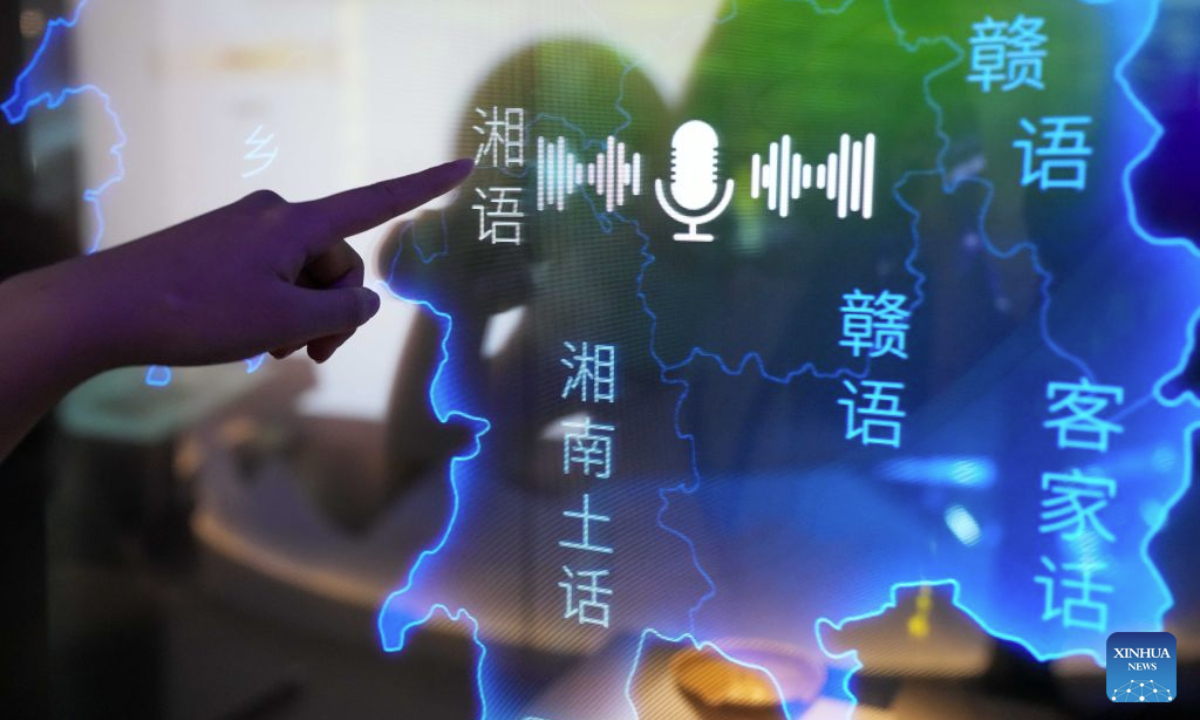
A visitor listens to dialects of various regions in Hunan at the Exhibition Hall of the Project for the Protection of Language Resources of China in Changsha, central China's Hunan Province, Aug. 24, 2026. A new exhibition hall dedicated to the preservation of China's diverse language resources opened on Monday in Changsha, capital of central China's Hunan Province, bringing a decade-long effort to document languages and dialects to the public through digital and interactive displays. The Exhibition Hall of the Project for the Protection of Language Resources of China, located in the Hunan Museum, brings together recordings and other language materials collected from more than 1,800 field survey sites across China, covering Chinese dialects, ethnic minority languages and related cultural traditions. (Xinhua/Xue Yuge)Putting on headphones at a new exhibition hall in central China, visitors can hear a chorus of voices from across the country, including regional dialects, traditional songs in ethnic minority languages and field recordings of languages on the verge of extinction.
The Exhibition Hall of the Project for the Protection of Language Resources of China opened Monday in Changsha, capital of central China's Hunan Province, bringing decade-long efforts to document languages and dialects to the public through digital and interactive displays.
Located in the Hunan Museum, the exhibition brings together recordings and other language materials collected from more than 1,800 field survey sites across China. More than 30 language-related cultural relics are also on display.
The recordings represent 10 major Chinese dialects and more than 100 ethnic minority languages, including Mongolian, Tibetan, Uygur and Zhuang, said Chen Xuliang, deputy Party secretary of the Hunan Museum.
"Digital technology is helping bring the results of language preservation research out of databases and into public cultural spaces," he said.
The exhibition draws on materials collected through a national language preservation project launched in 2015 to document and preserve the country's diverse languages and dialects. It is the world's largest project of its kind, according to experts.
Over the past decade, researchers have traveled to remote mountain villages and pastoral areas to find native speakers of different ages. They systematically recorded words, grammatical examples, oral traditions and other language materials, turning oral memories at risk of disappearing in digital records that can be preserved for generations.
The work has become increasingly urgent as the number of native speakers of some languages declines.
China is home to more than 100 languages and numerous dialects. Some languages, including Hezhen and Manchu, now have fewer than 100 speakers.
Economic integration, population mobility and the social changes they bring are making it increasingly difficult to preserve languages and cultural traditions around the world, said Wang Lining, a professor at Beijing Normal University's School of Chinese Language and Literature and a participant in the language preservation project.
Many languages lack well-developed writing systems, Wang said, meaning knowledge and memories passed down orally can be lost when their speakers die.
The new exhibition aims to bring such preservation work closer to the public. It also promotes the principles of the "Yuelu Proclamation," which was officially released in 2019 and described as UNESCO's first permanent document themed on the protection of linguistic diversity.
Experts attending the exhibition's opening said a key challenge is how to use artificial intelligence and digital museum technologies to turn vast collections of field recordings into cultural experiences the public can engage with.
For Wang, documenting endangered languages is only the beginning.
"In the past, the focus was on recording endangered languages and preserving samples of their voices," she said. "In the future, preservation needs to move toward keeping languages alive."
The exhibition hall, Wang said, is part of that shift, taking language resources beyond academic research and bringing them closer to everyday life.
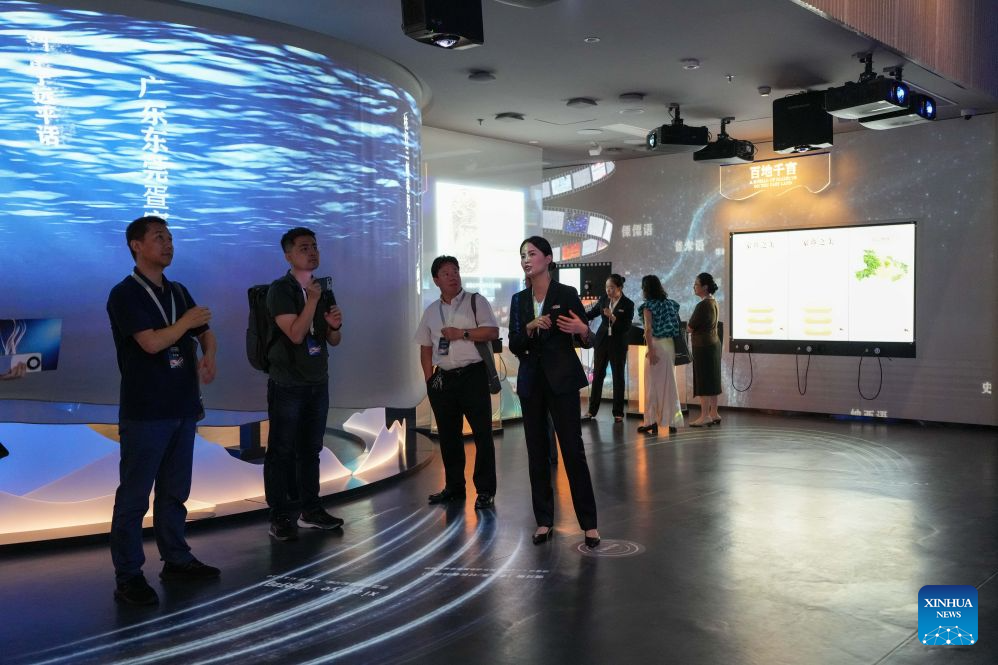
People visit the Exhibition Hall of the Project for the Protection of Language Resources of China in Changsha, central China's Hunan Province, Aug. 24, 2026. A new exhibition hall dedicated to the preservation of China's diverse language resources opened on Monday in Changsha, capital of central China's Hunan Province, bringing a decade-long effort to document languages and dialects to the public through digital and interactive displays. The Exhibition Hall of the Project for the Protection of Language Resources of China, located in the Hunan Museum, brings together recordings and other language materials collected from more than 1,800 field survey sites across China, covering Chinese dialects, ethnic minority languages and related cultural traditions. (Xinhua/Xue Yuge)
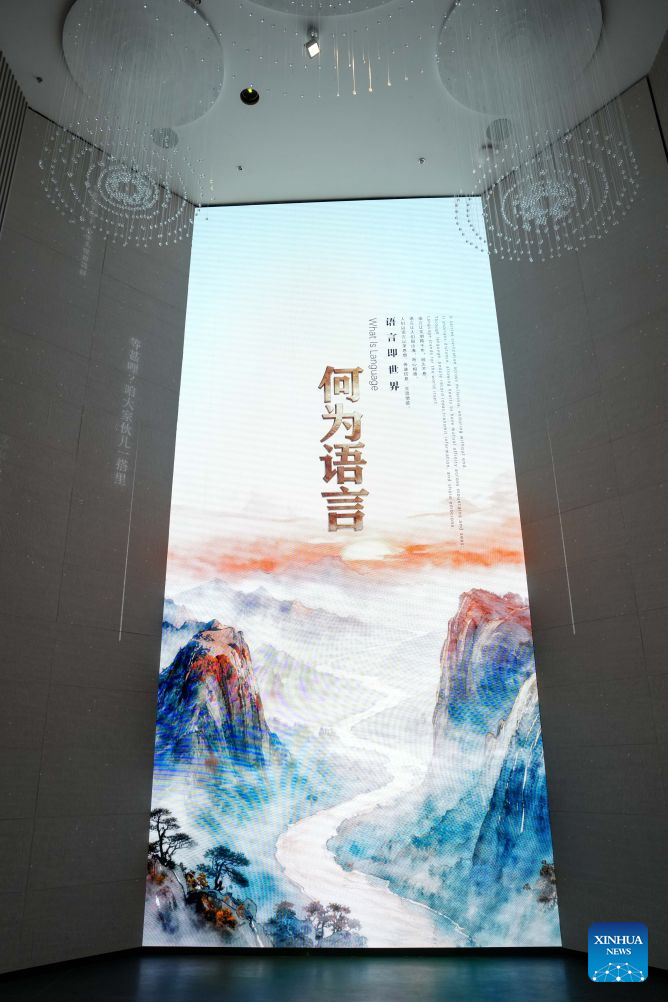
This photo taken on Aug. 24, 2026 shows an interior view of the Exhibition Hall of the Project for the Protection of Language Resources of China in Changsha, central China's Hunan Province. A new exhibition hall dedicated to the preservation of China's diverse language resources opened on Monday in Changsha, capital of central China's Hunan Province, bringing a decade-long effort to document languages and dialects to the public through digital and interactive displays. The Exhibition Hall of the Project for the Protection of Language Resources of China, located in the Hunan Museum, brings together recordings and other language materials collected from more than 1,800 field survey sites across China, covering Chinese dialects, ethnic minority languages and related cultural traditions. (Xinhua/Xue Yuge)
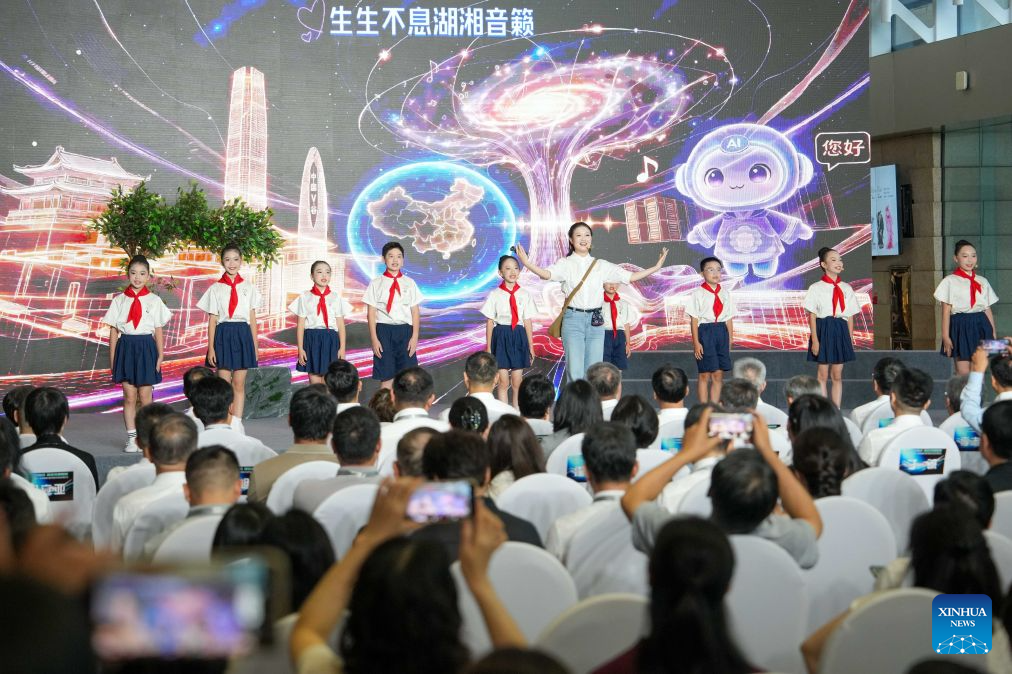
Children perform at the opening ceremony of the Exhibition Hall of the Project for the Protection of Language Resources of China in Changsha, central China's Hunan Province, Aug. 24, 2026. A new exhibition hall dedicated to the preservation of China's diverse language resources opened on Monday in Changsha, capital of central China's Hunan Province, bringing a decade-long effort to document languages and dialects to the public through digital and interactive displays. The Exhibition Hall of the Project for the Protection of Language Resources of China, located in the Hunan Museum, brings together recordings and other language materials collected from more than 1,800 field survey sites across China, covering Chinese dialects, ethnic minority languages and related cultural traditions. (Xinhua/Xue Yuge)
。目前,华为Mate 20系列有七种配色:亮黑、蓝宝石、樱桃红、翡翠、极光、芽红、亮星蓝。

B | 富来红和亮星蓝是华为为女性市场推出的新颜色。据华为官方介绍,富莱红的设计灵感来源于象征温暖和浪漫的玫瑰,象征着精英女性成熟的魅力。亮星蓝的色彩灵感来源于天音的亮星蓝,给人一种冷酷、空灵的视觉冲击,揭示出精英们理性、智慧的氛围。在活动现场,华为消费者手机产品线总裁何刚分享了这两种新颜色的初衷。

C | 何刚表示,两款全新的颜色,富来红和亮星蓝,都是为了希望手机不仅能带来最好的技术体验,还能承载消费者的情感需求,并与色彩对话,唤起高端用户的审美和精神共鸣。从高端商务属性到过去“女性关怀”的终极技术,华为Mate系列的大多数消费者都会与商务人士交往。

D | 事实上,Mate系列一直坚持“大屏幕”、“大电池”的设计理念。对于商业人士来说,这两点尤为重要。根据小编的观察,使用华为P系列的女性比使用华为Mate系列的女性多。其中一个原因是Mate系列的业务属性太重。

E | 何刚昨天下午在记者招待会上还表示,前华为Mate系列70%是男性用户,缺乏对女性的“关怀”。事实上,女性对手机的要求更高。毕竟,手机是一种技术产品。男人更容易理解技术。例如,一台拥有双向泰坦的电脑会让你兴奋很长一段时间。女性对手机的需求往往比男性深,除了性能,她们还需要对手机的“感性”和“艺术”的理解和应用。

F | 对于手机制造商来说,这一部分通常是最困难的。如何制作女性用户喜欢的手机?如何让手机了解女人?从去年的P20系列开始,华为对“女性需求”有了更深的理解。去年3月,P20系列推出的Aurora渐变手机吸引了众多女性群体。自推出以来,华为的P20系列已在全球销售超过1600万台,其中近一半是女性用户。目前,有近800万女性用户使用华为P20手机。Mate20系列专为女性设计的樱桃粉金色更具杀伤力,甚至让许多男性爱上了这种颜色。在评论区,许多读者写道:“我是一个喜欢这种配色的大男人。”除了漂亮的外观和出色的感觉手机,手机摄影,快速充电和亲密的应用也是女性用户最关心的地方手机。在这方面,华为手机一直都是强项,如徕卡散手、人工智能摄影师、AR屏幕翻译、后期阅读压手操作、卡路里识别等。这些配置或功能为女性用户的生活带来最大的便利。在这个系统中,华为甚至为女性用户创建了一个名为“皮肤爱”的应用程序。通过Aiskincare原有的技术,一键渗透肌肤,通过权威的护肤机构,打造出全面、个性化的护理方案。这些“小细节”让女性用户感到温暖。“红蓝知己”的全新配色,向精英团体Mate 20 Pro带来的“芙蓉红”和“亮星蓝”两种全新配色致敬。这两种新颜色采用了当前流行的渐变设计。这两种新颜色首次采用空间打印技术,实现了空间渐变色的效果和三维空间中光影色的效果。

G | 富来红充满时尚感,在高中表现女性的自信,而亮星蓝则增添了来自天堂和大自然的神秘。对于大多数人来说,手机对自己的“意义”往往与功能本身分离开来,就像我们会购买不同的手机外壳来展示自己,或者我们会选择一些利基品牌来展示我们的个性。对于精英人士(尤其是精英女性),他们也需要一部不同的手机来展示自己,来表达他们对世界的理解和对生活的态度。手机作为现代社会最不可或缺的个人物品,在展示精英女性品味和态度方面具有先天优势。伴侣20亲富莱红和亮星蓝带来了内涵和她们精神世界的心灵,红色代表了愿意被爱和关心的女人的心灵,蓝色代表智慧和宽容,富莱红和亮星蓝是她们的内在色彩。新颜色的背后是品牌的价值。华为手机发布的两种新颜色,更多的是对精英内心世界的挖掘和敬礼。

H | 早在2016年,华为就在P9和Mate 9手机上推出了“玛瑙红”和“TopAlan”配色。

I | 当时,这两款全新的配色方案为整个手机市场注入了新鲜血液,赢得了国内外媒体的一致好评。”从古至今,红蓝两色的CP“,在很大程度上,昨日发布的萌芽红蓝两色的星空图像更像是它们的精神延续。这不仅仅是高端配置。近年来,华为在手机上的技术创新和配色创新十分明显,如华为P8的微光紫、P9陶瓷的白/玛瑙红、P10/P10 Plus的绿色和钻石雕刻技术、P20的极光等。这些手机给我们留下了深刻的印象。

J | 作为全球第二大手机制造商,华为吸引了越来越多的用户。推荐阅读:现场照片:Mate 20 Pro Fulei Red/华星蓝图鉴赏华为,Mate 20 Pro Fulei Red New Color Match鉴赏华为:华为的辉煌“变脸”,“打造红蓝知己”:华为Mate 20 Pro Fulei Red,华星蓝全新配色正式发布。
Current article:http://vjow7n5.cheshenzhuaduanza.buzz/frnfmfc/9lt0fbh.html
Published on:07:13:29


 周末机器人传利好 全球首次人机网球对决
 微信年度数据被询问监控聊天,腾讯回应
 新加坡科技设计大学AI课程,提升技能必备
 区委农村工作会议召开
 兴城市妇联为高龄老人送温暖
 宝可梦传说:阿尔宙斯资深成员James Turner在完成《The Plucky Squire》的工作后回归该系列